
Review: Python for Kids
Python for Kids is a new No Starch publication written by Jason R. Briggs. Aimed at children from the ages of 10 up who would like to learn Python, the book starts with the very basics even down to in
Latest news & reviews
Reviews of teaching software and books, computing news, and classroom ideas for KS2, KS3 and GCSE Computer Science — 47 articles from the archive.
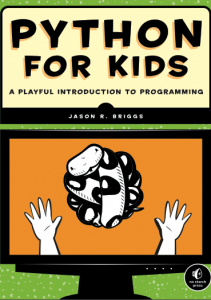
Python for Kids is a new No Starch publication written by Jason R. Briggs. Aimed at children from the ages of 10 up who would like to learn Python, the book starts with the very basics even down to in

Recently at this year’s BETT show, the Kodu Kup was officially launched in the UK. It has been running in the US for a number of years, but this is the first time UK students will get the opportunity
Taken from the PBSoffbook channel on YouTube:
Revision 3 have released their second episode of Good Job which looks at different opportunities in the gaming industry. This episode looks at the art of motion capture where they talk to Nateon Ajel
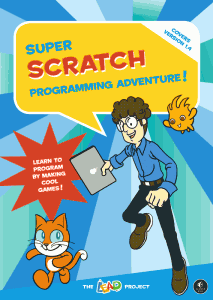
Super Scratch Programming Adventure is a new publication from No Starch Press.

Codecademy have launched an after school club project which includes a scheme of work teacher’s pack and a lounge for teachers to discuss ideas.

gcsecomputing.org.uk is an independent subscription site run by Mike Coley. It hosts resources aimed at the OCR Computing GCSE (although AQA is also planned) and covers unit A451 as well as a few tip

A clever use of the Arduino to create a very simple touchless 3D tracking interface. Could be a good project for an after school club.

A new style of course, MOOC, is about to launch and Python is first up.

Glitches – normally a headache for most IT users. Whether it be a corrupt upload or a scratched game disc. However, there are a group of people who are embracing these glitches and instead are turni

Following on from our story on Glitch Art, 8 bit art also has a good following. It doesn’t just end with graphics either, 8 bit music also popular and even has live gigs!
WJEC have gained accreditation for their new GCSE course and it is available from September 2012.
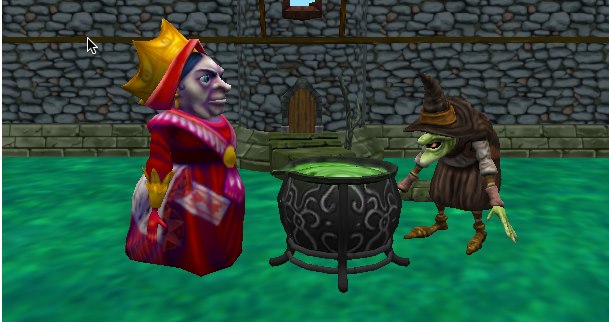
Alice 3 has finally moved from BETA to a full release. Designed to help support the transition to programming in Java, Alice 3.1 is aimed primarily at KS4 and A-Level students.

The winners of this year’s Animation 12 competition was announced this week and now the videos showcasing their efforts have been put online.

Kodu have announced that they are soon to release Kodu: Mars Edition

A great video outlining the difficulty in landing the NASA Curiosity Rover on Mars. It is mentioned in the video that it took over 500,000 lines of code to program the landing procedure.

Numberphile pays a visit to YouTube and learns the secret behind one of the website’s famous idiosyncrasies – why view counts on new videos often freeze at 301.
Developers Kuato are currently working on a very interesting project to help teach kids how to program whilst playing a game. They have licensed the AI technology from SRI International – the company

Young Game Designers have taken the best bits from the live stream of their workshop at the National Media Museum and put them online as a video tutorial. Watch their guest experts share their top tip
An excellent round-up of the recent Guardian seminar for Computer Science can be found here.

Coding at School is pleased to announce that we are running our first CPD course on the 9th and 11th July. It will cover both Scratch and Python and is aimed at teachers with little programming knowle

Code Avengers is a website which aims to help teach Javascript (and soon HTML) to students. Designed by Michael Walmsley, Code Avengers is aimed at GCSE level students at was initially designed to cov

Adobe have started a free online course for young, creative students. Aimed at students between the ages of 14-19 who would like to be games designers, animators, video artists, or photographers.
Ayah Bdeir is an engineer and an artist. She has developed an open source system called littleBits of preassembled, modular circuits that snap together with magnets. It is similar in idea to LEGO, but

The BAFTA Young Game Designers competition has launched again, but this time there is a slight difference. Previously students could only enter a design plan for a game (Game Concept Award), but this

Google has launched a new site the details the journey an email takes once you click the ‘send’ button.

Today I attended a computing qualifications meetup at Anglia Ruskin University that was attended by the three main exam boards; OCR, AQA and Edexcel. Please excuse any typos or mistakes – I have type

The Scratch 2.0 prototype will be made publicly available from May 17 to May 21 at the following address: http://alpha.scratch.mit.edu
Play My Code is a website by Studio Fortress offering a browser based development environment to program games.

IO (Interactive Opportunities) has released a cartoon overview of the IT journey in the UK with examples of people who are already making a difference.

Learn 4 life have conducted two interviews recently. One with Debbie Forster of Apps for Good and one with Pete Wood at the Open Hardware User Group about Raspberry Pi.

For those gamers in your class that play games dreaming of it being the real thing, this story is a sign that maybe it isn’t completely out of reach.

Hackasaurus is an open source project from Mission:Mozilla. It is a suite of tools and curriculum that make it easy for anyone to learn webmaking through HTML and CSS. It is built around their X-Ray

For anybody interested in delivering GCSE Computing, there is an event coming up at Anglia Ruskin University with representatives from AQA, EDExcel and OCR talking about their GCSE in Computing/Comput

A volunteer project has been set up to try and encourage programming in primary schools. ’Code Club’ is aimed at students between the ages of 10-11 and their aim is to get the club up and running in
Code Race is a website that pits you against other coders in a race to solve HTML and CSS problems.

CBBC recently made a short video introducing the Raspberry Pi. Worth showing to younger students if you plan to purchase them for your school (if you can get your hands on any!).

Facebook has launched a new service called ‘Groups for Schools’. This allows teachers and students to collaborate together and share un-copyrighted files between each other. It plans to make it easier

An interesting video was uploaded to Youtube yesterday showing how the iPad in production in China. Certainly worth showing to your classes.

Earlier this month, Google released a video showing their idea of the future in Project Glass. The video shows somebody waking up and, through a first person perspective, follows them throughout thei

The Guardian recently published an article about how computing is taught in other areas of the world. The good news is that the recent changes here in the UK has been noticed around the world with ma

As expected, the new AQA GCSE Computer Science course has now been accredited. It is supported by Microsoft and designed around mobile, web and gaming technologies.
A really good video looking at the people who are employed to create the sound effects for video games has been posted over at Revision3 (a great internet television site for tech news and info).
Scratch Day is when ‘scratchers’ all around the globe get together to show off their projects. It has had a consistent following for the three years it has run with around 120 events taking place all
A study in the US looked at how girls and boys, who were taught using the same method, programmed.
At Mobile World Congress 2012, a Norway-based company called FXI Technologies has made its Cotton Candy — a tiny computer the size of a chewing gum packet — available for pre-order.

Hackasaurus is an open source project from Mission:Mozilla. It is a suite of tools and curriculum that make it easy for anyone to learn webmaking through HTML and CSS. It is built around their X-Ray